Tour the Farm And Learn How We Grow Garlic
We love our garlic, we love to plant it, tend it, and harvest it, too. Join us for an interactive tour and get to know our processes and our people. To begin the tour, click on any of the thumbnail images below.
A Photo Tour
Click any of the thumbnails to begin the tour.
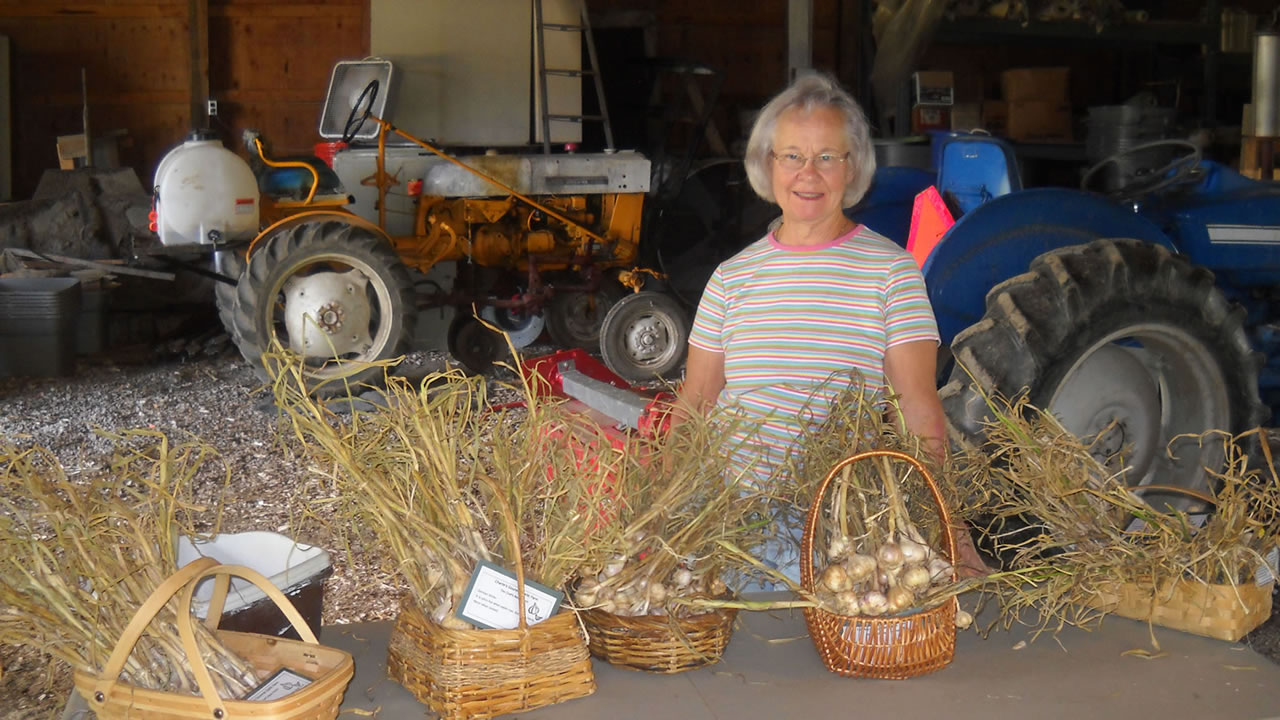
Marjorie's green thumb has nurtured her five flower gardens into a veritable Garden of Eden. Her culinary skills in baking and cooking are also well known. Her use of garlic, onions, and peppers to start almost every meal, drive visitors to her kitchen wild with anticipation.
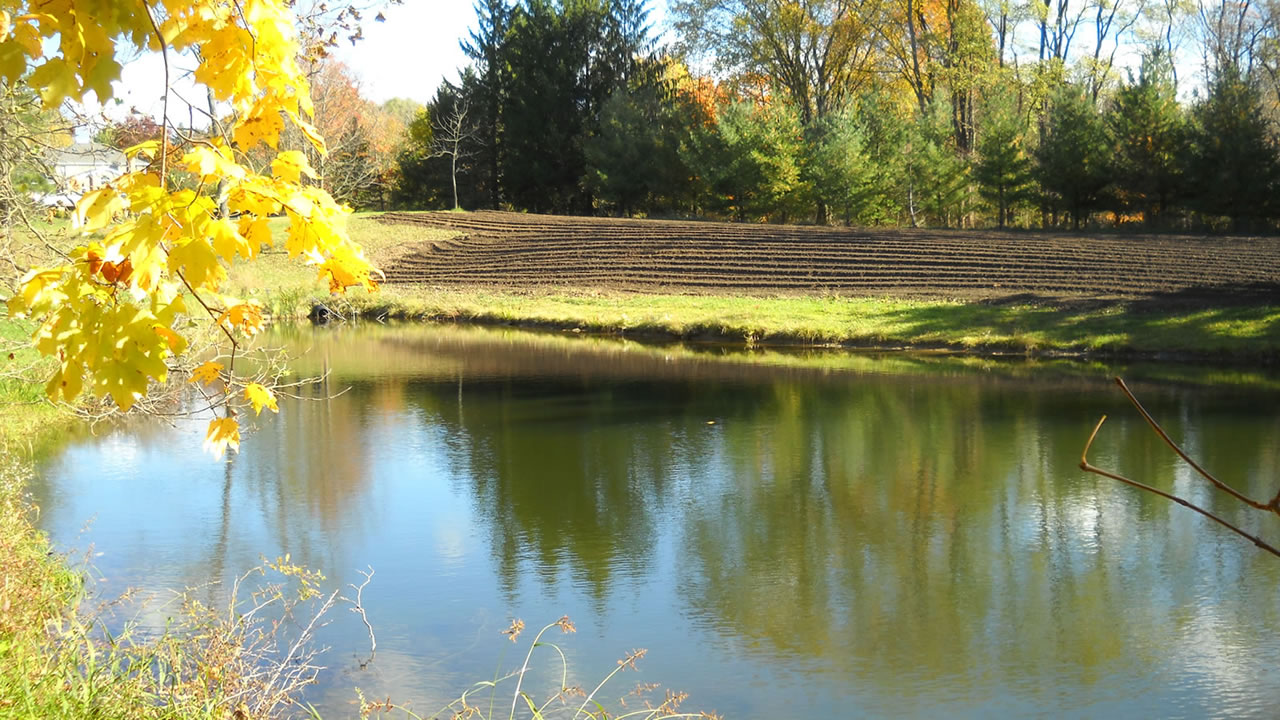
This lake is small in size but adds so much to our lives and those of our children and grandchildren. It's our million dollar view. It harbors large bass and bluegill and its inviting waters attrack many kinds of wildlife.
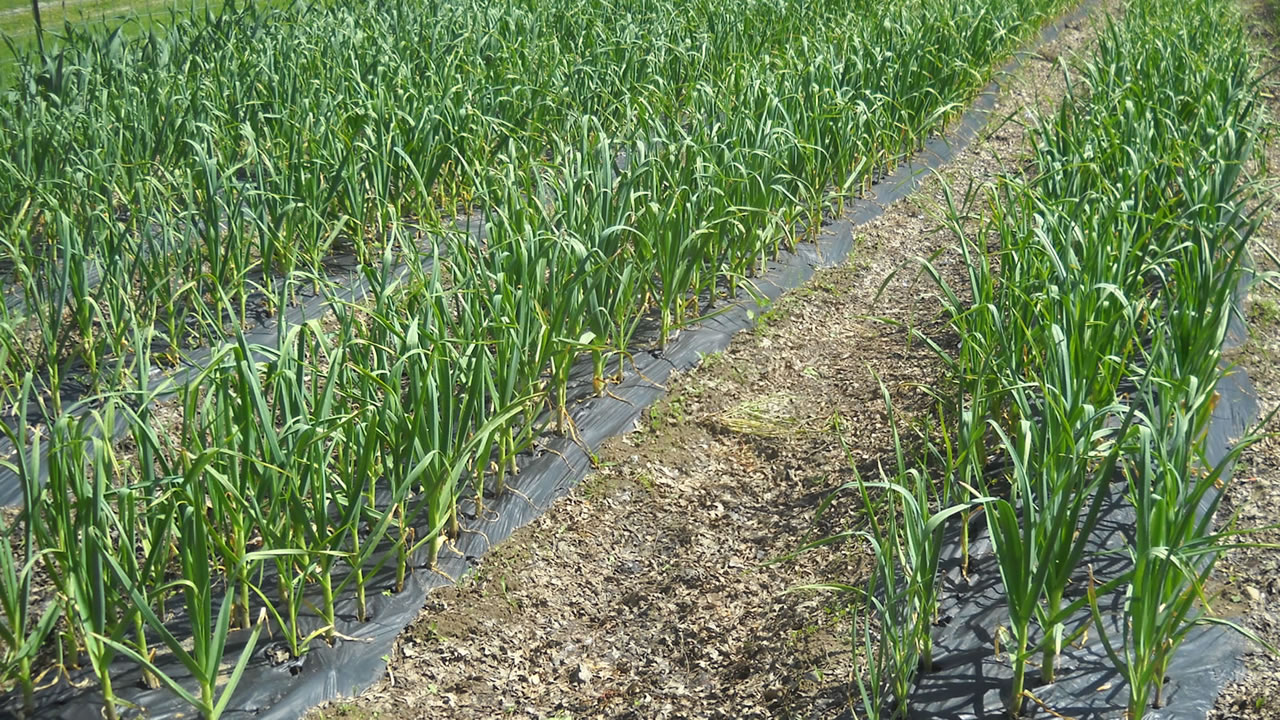
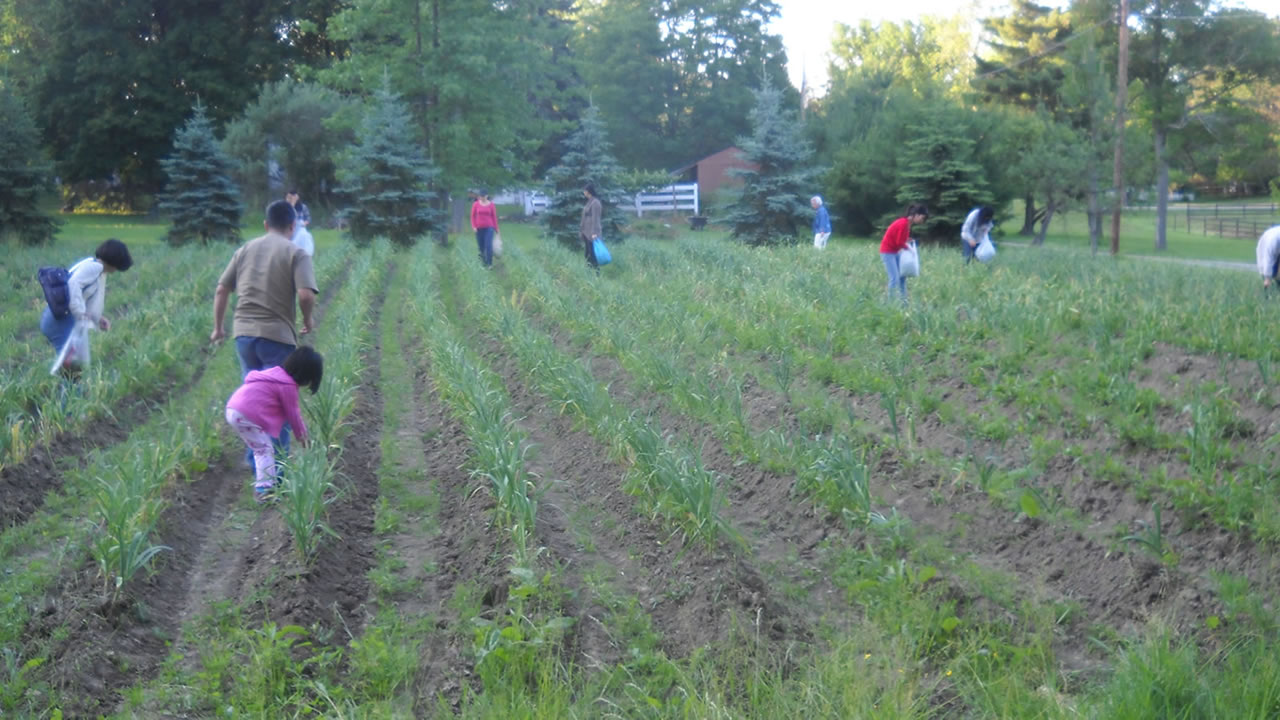
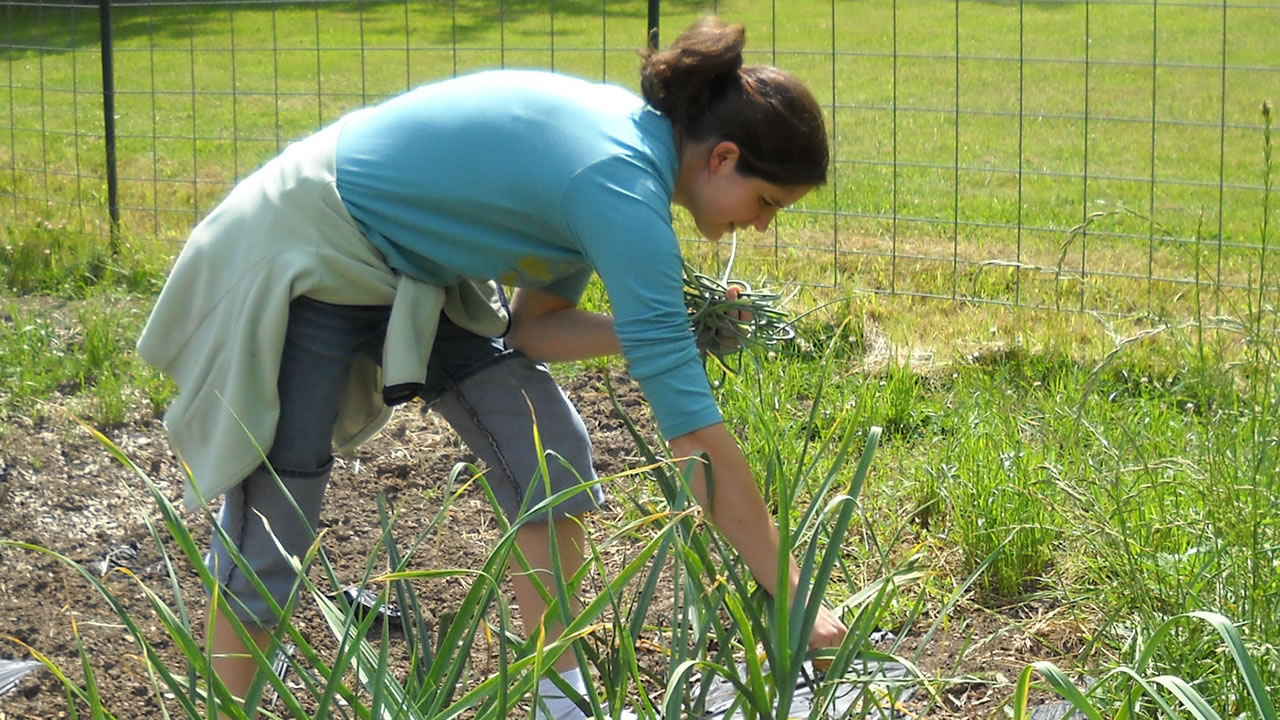
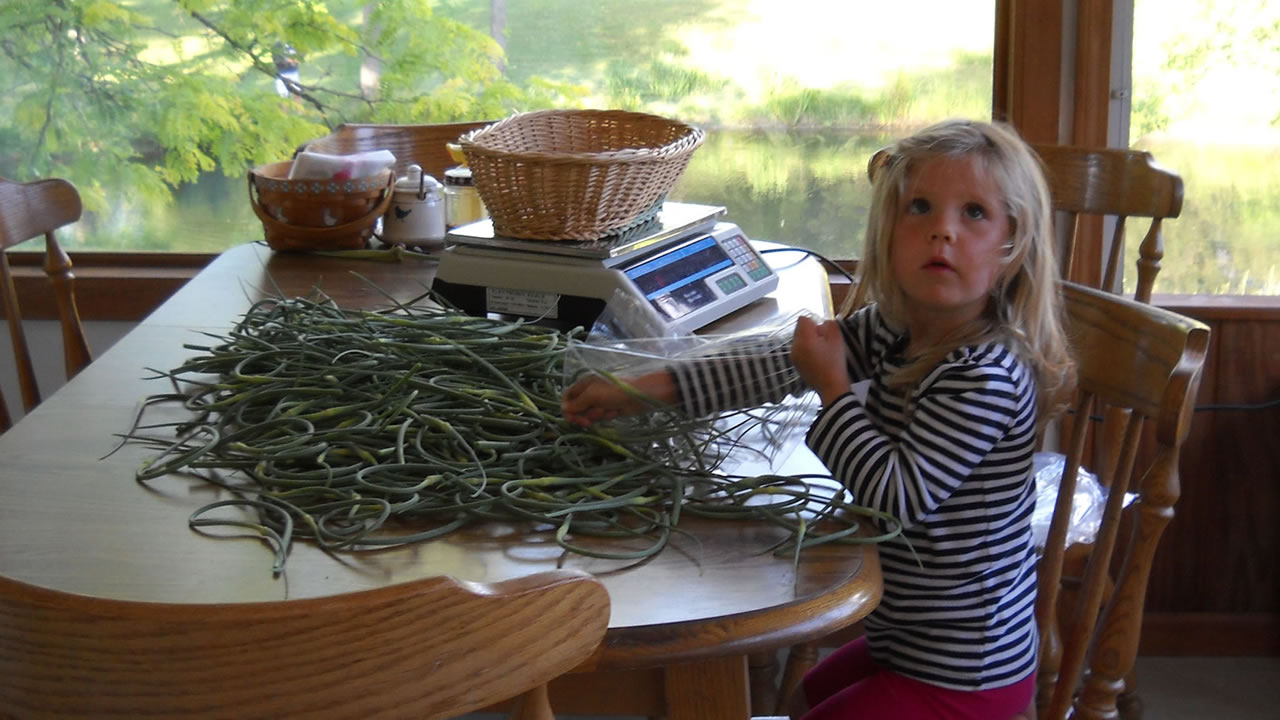
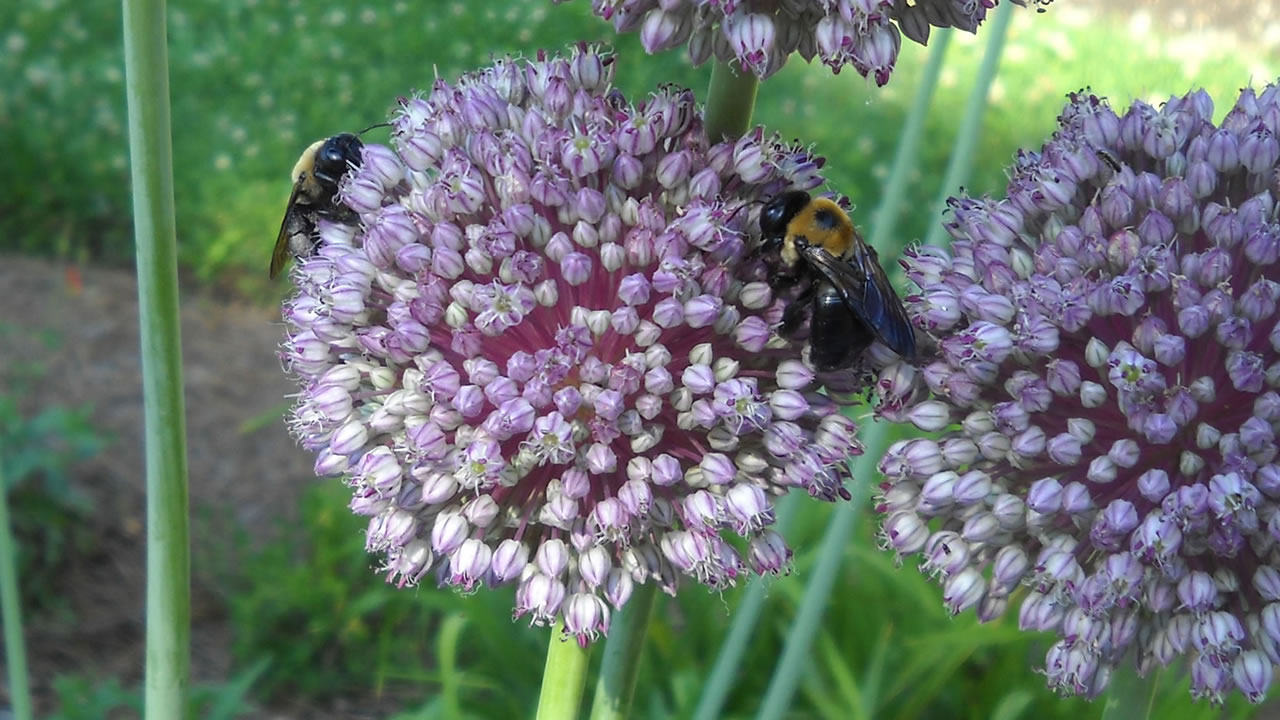
It's hard work cutting or snapping off scapes from thousands of hard neck garlic. It's necessary to do this in June to keep the garlic from producing pods of bulbils (miniature cloves), which drains energy away from bulb development and size. Charlie enjoys them chopped fine and added to anything that needs garlic. They are excellent in pesto.
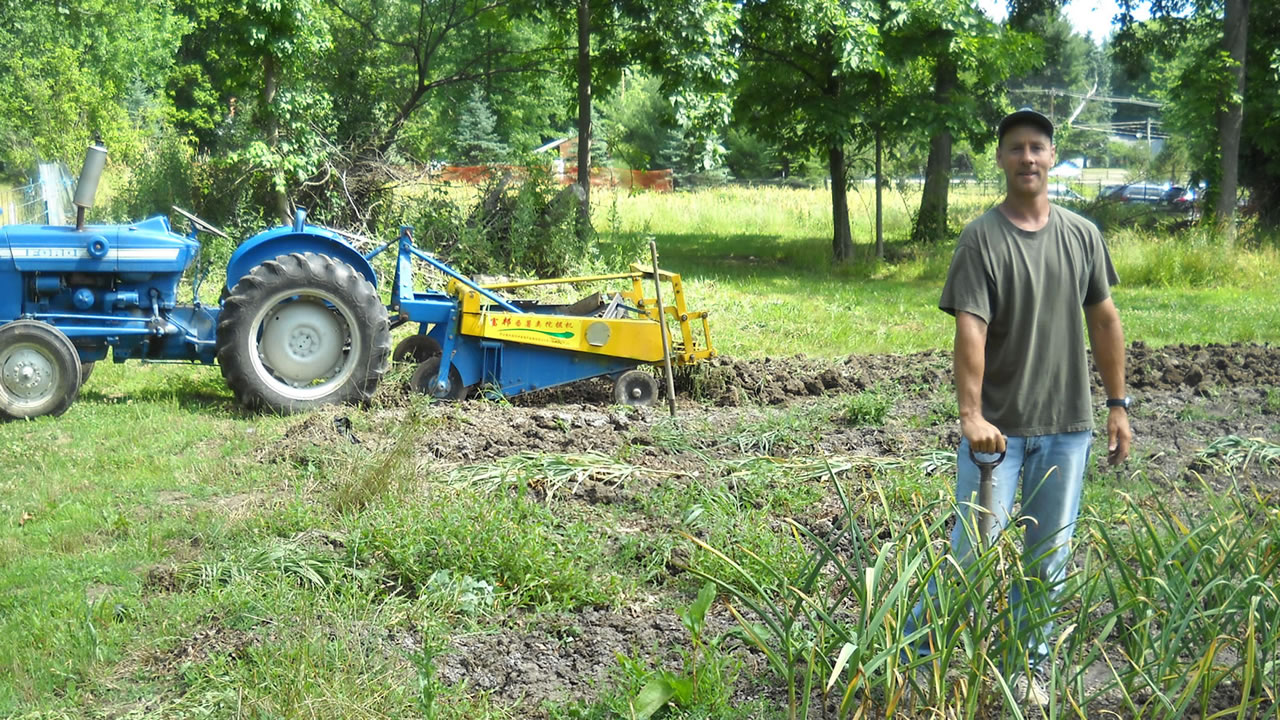
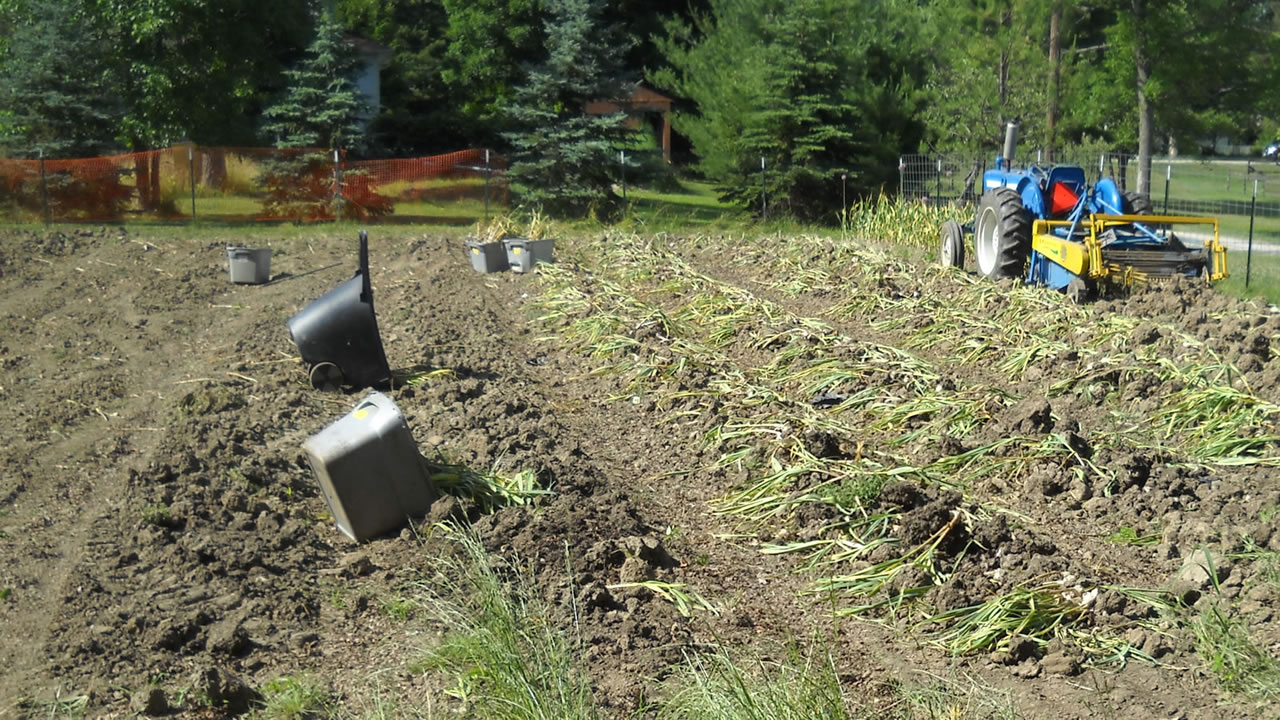
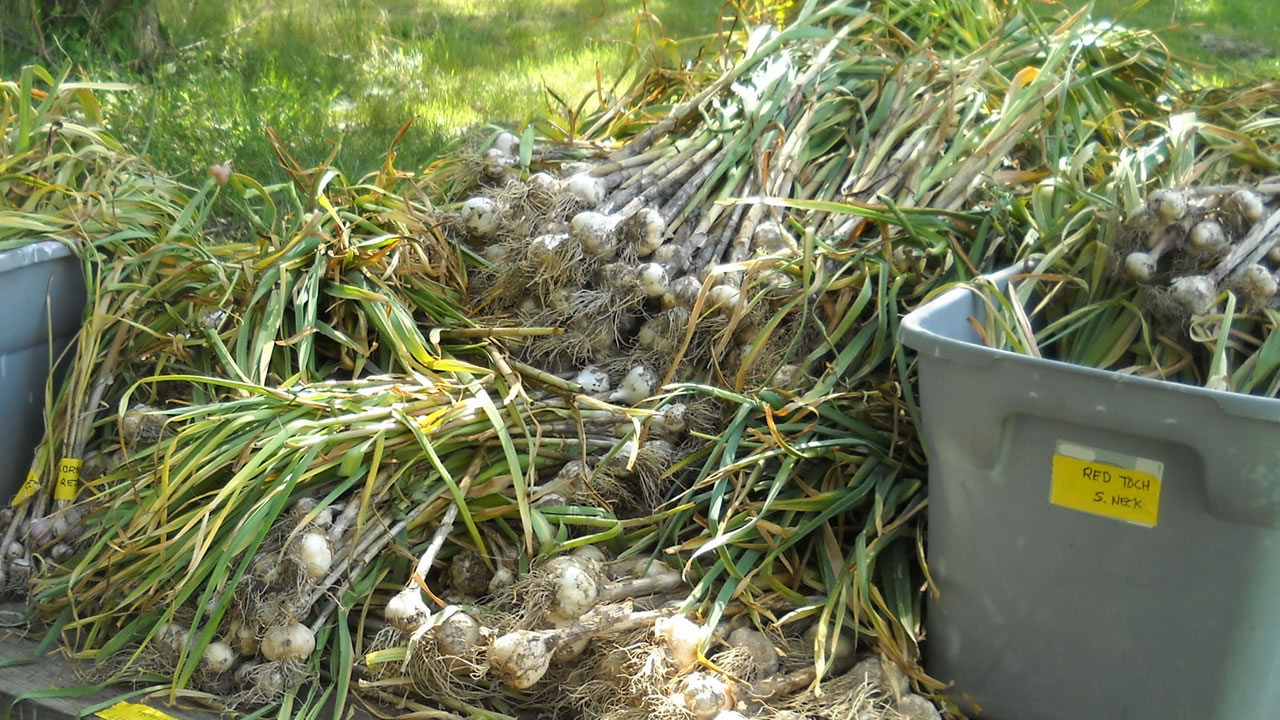
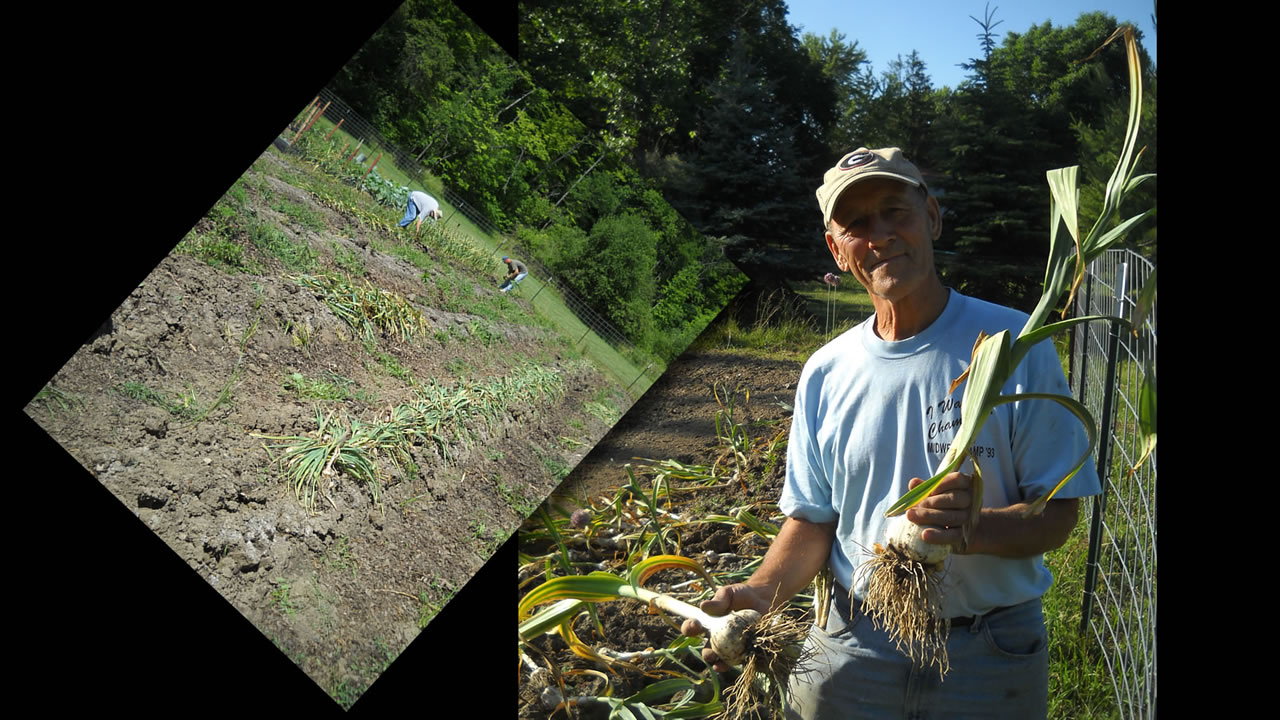
Digging garlic is hard but rewarding work, especially when you get a huge bulb. One must be careful to not cut or bruise the garlic. Excess dirt is removed prior to washing.
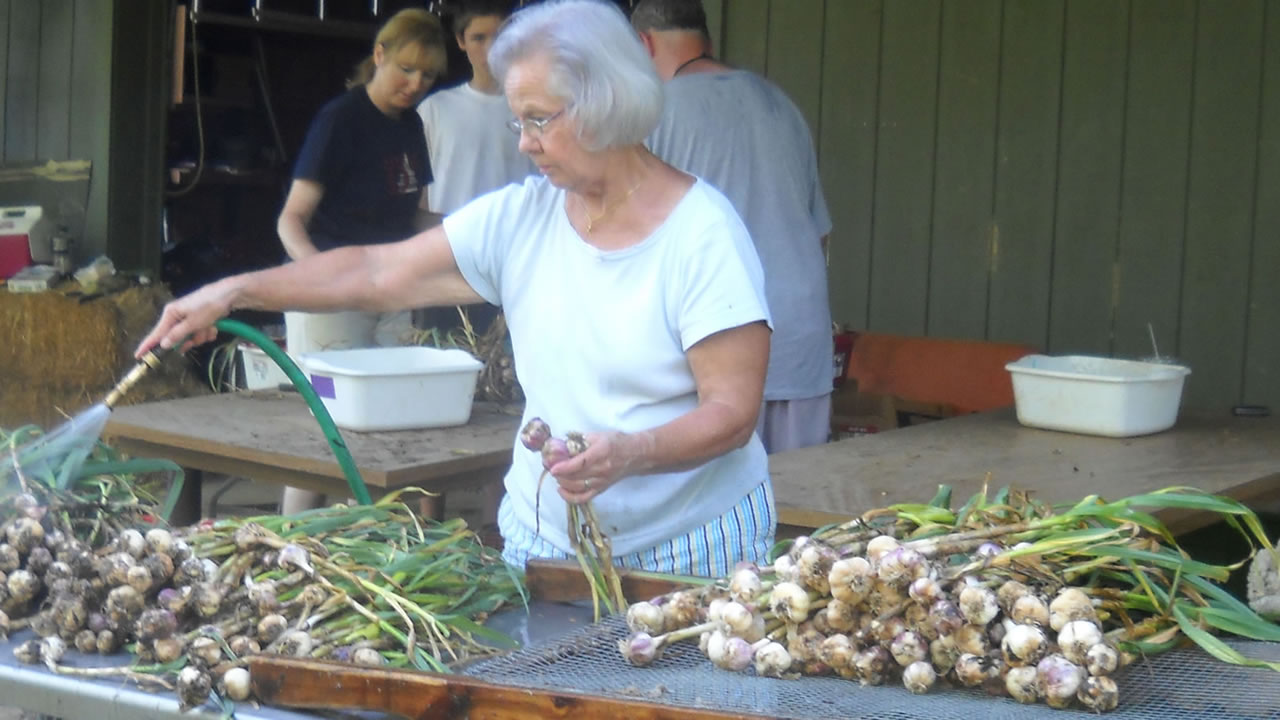
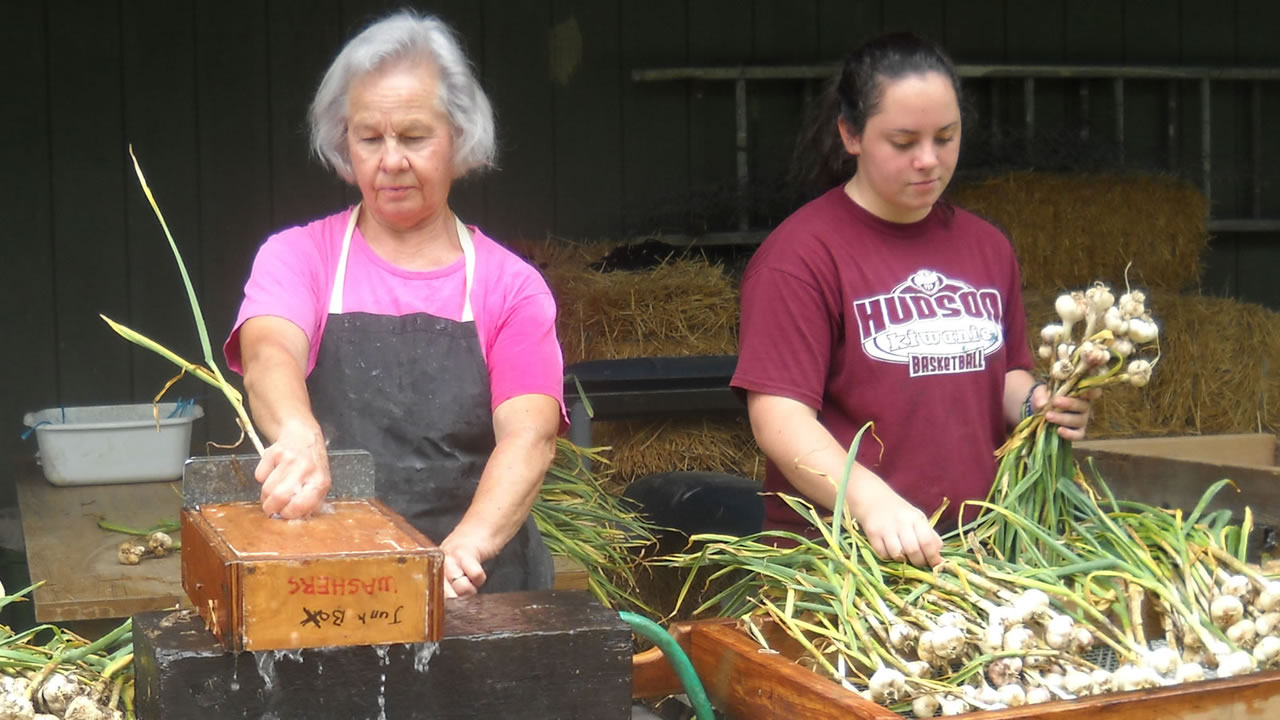
Some folks advise against washing but we have found it helpful in keeping things clean and dust free. Our garlic dries nice and clean, and stores well.
Washed, freshly dug garlic is beautiful and very mild in flavor. Garlic gets its heat as it dries. This garlic is a marbled purple stripe.
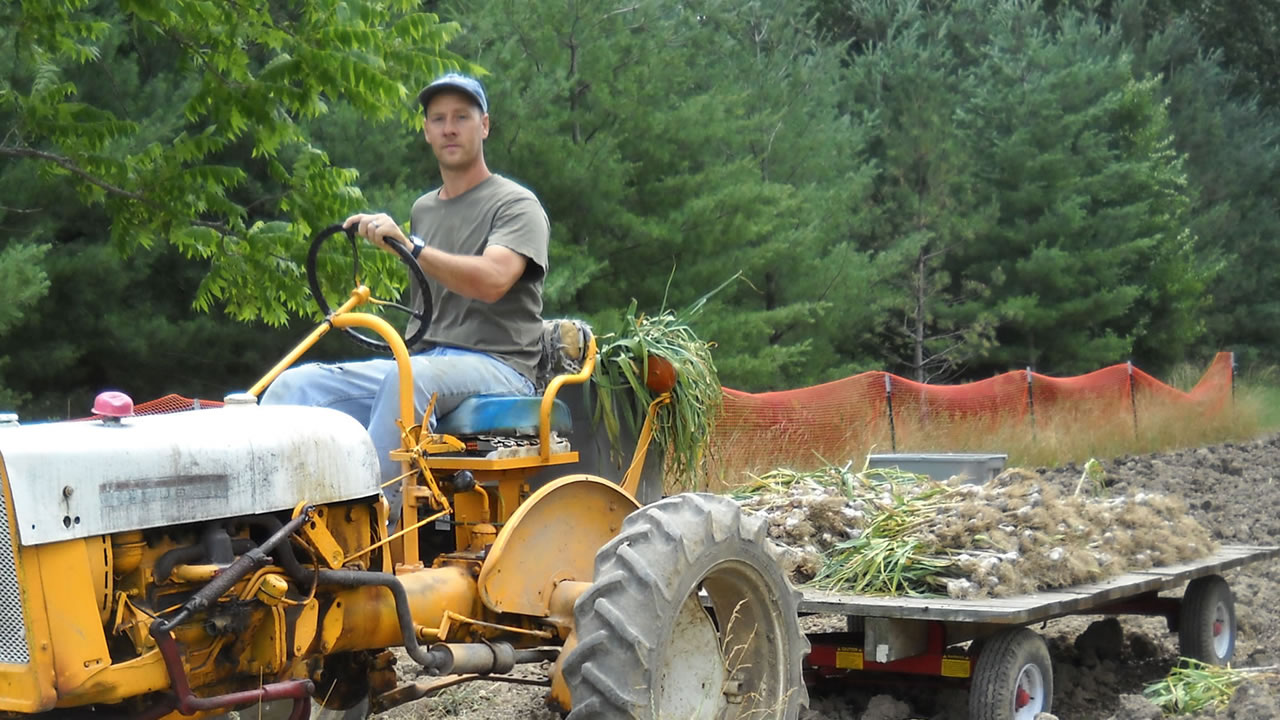
Freshly dug garlic gets sun burned easily if left in the hot sun. It should be covered or taken into shade soon after being dug. Some growers harvest in late afternoon or in the evening to avoid the sun.
Garlic is usually sorted by four sizes:
- 2.5in.
- 2.25in.
- 2in.
- 1.5in.
Smaller sizes are sold as kitchen or food garlic.
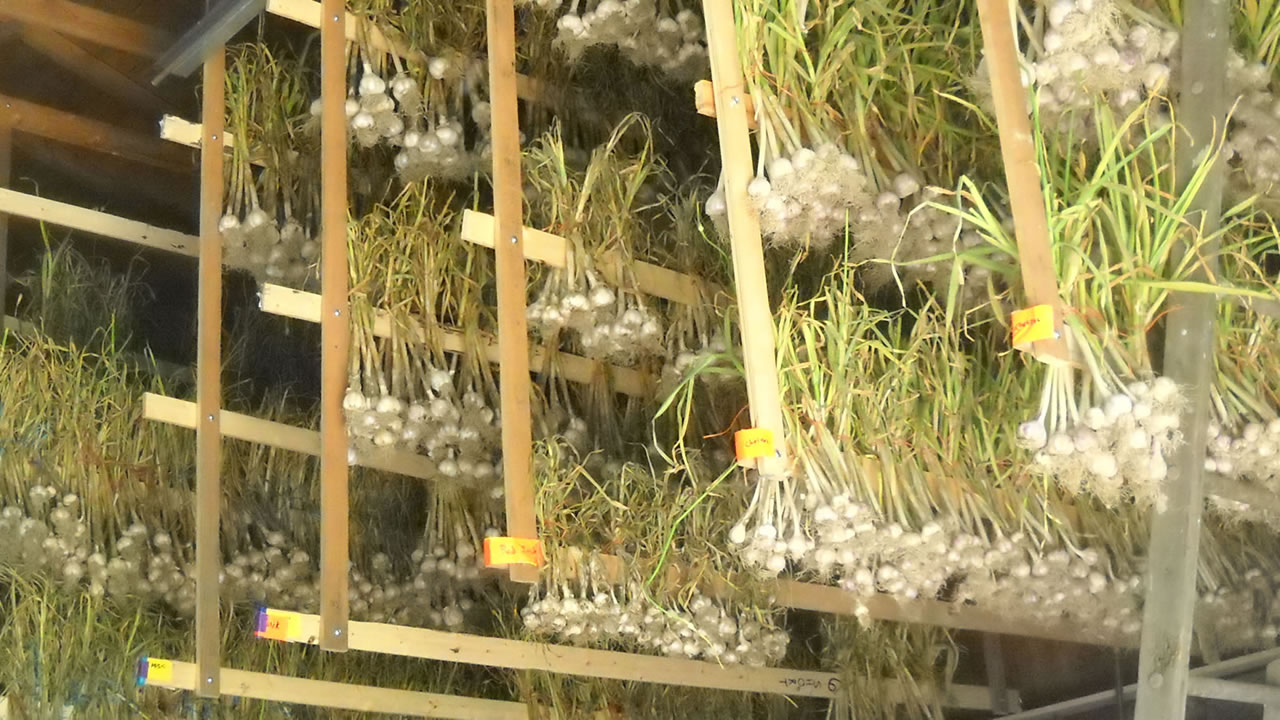
Ten or twelve garlic plants are tied together before they are hung up for drying.
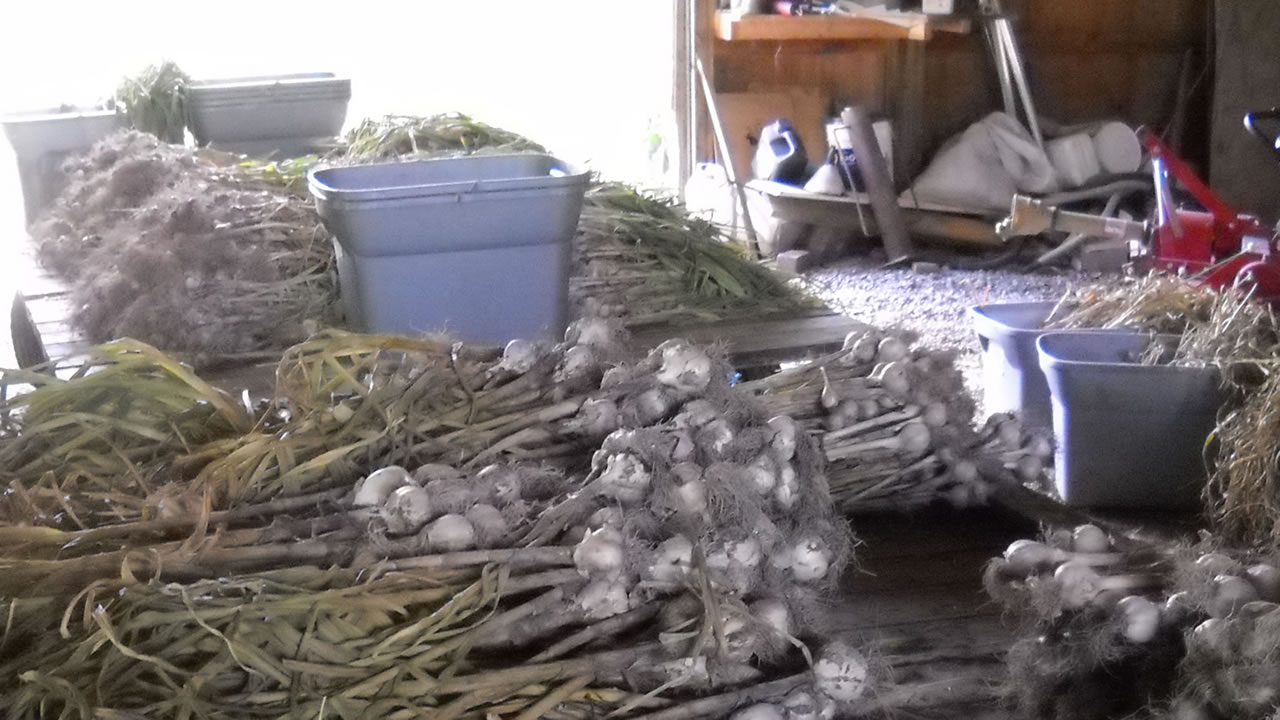
Garlic must be dried for two to three weeks to shrink the stalk tight to seal in moisture. It is normally hung with the bulb down. Air circulation is crucial. Fans are often used when there is a large amount of garlic to dry.
Good air circulation is necessary to give garlic a good cure. To test if the garlic is dry enough, squeeze the stem an inch from the bulb. If no juice can be squeezed from the stem, it is dry and will store well.
When dry, the garlic leaves and stalks are brown and tan in color. Thoroughly dried garlic is ready for trimming. Stems are cut off an inch above the bulb and the roots cut to 1/4" length. This way it will store longer without the bulbs becoming dehydrated.
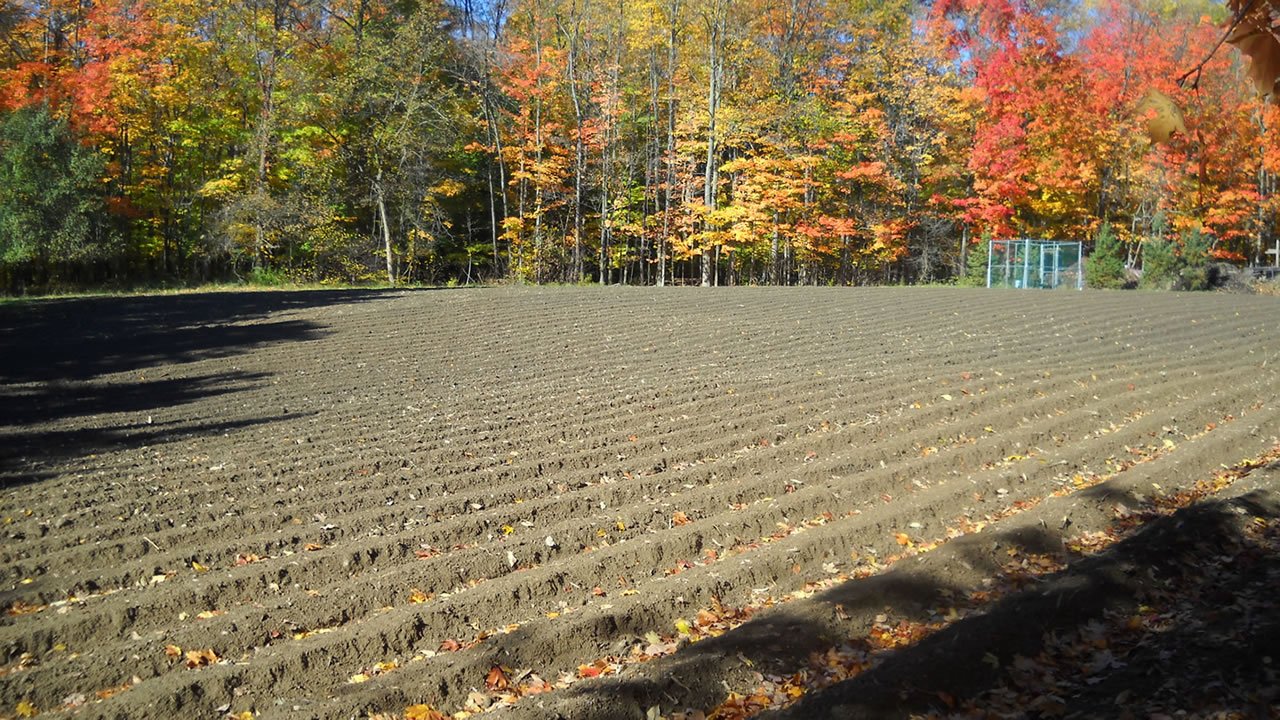
Fields and raised beds must be prepared for October planting by incorporating cover crops (green manure), compost, or manure. These should all be tilled or worked into the soil several weeks before planting garlic cloves.
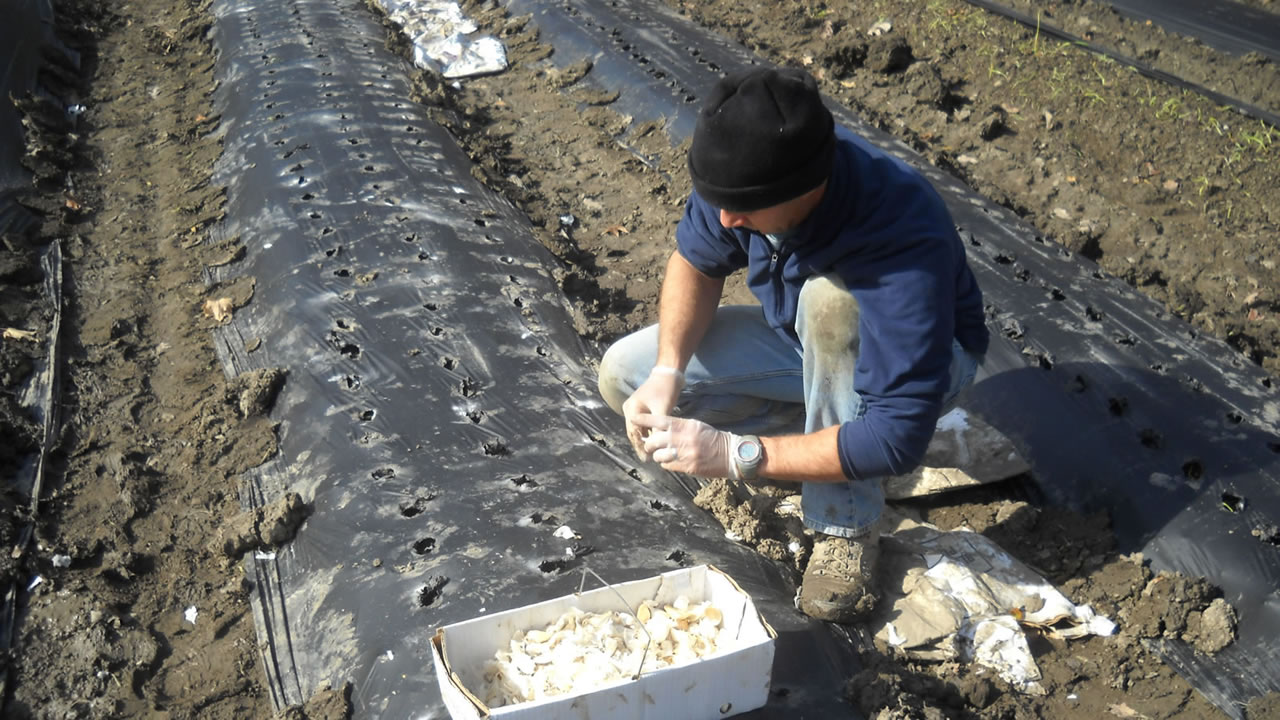
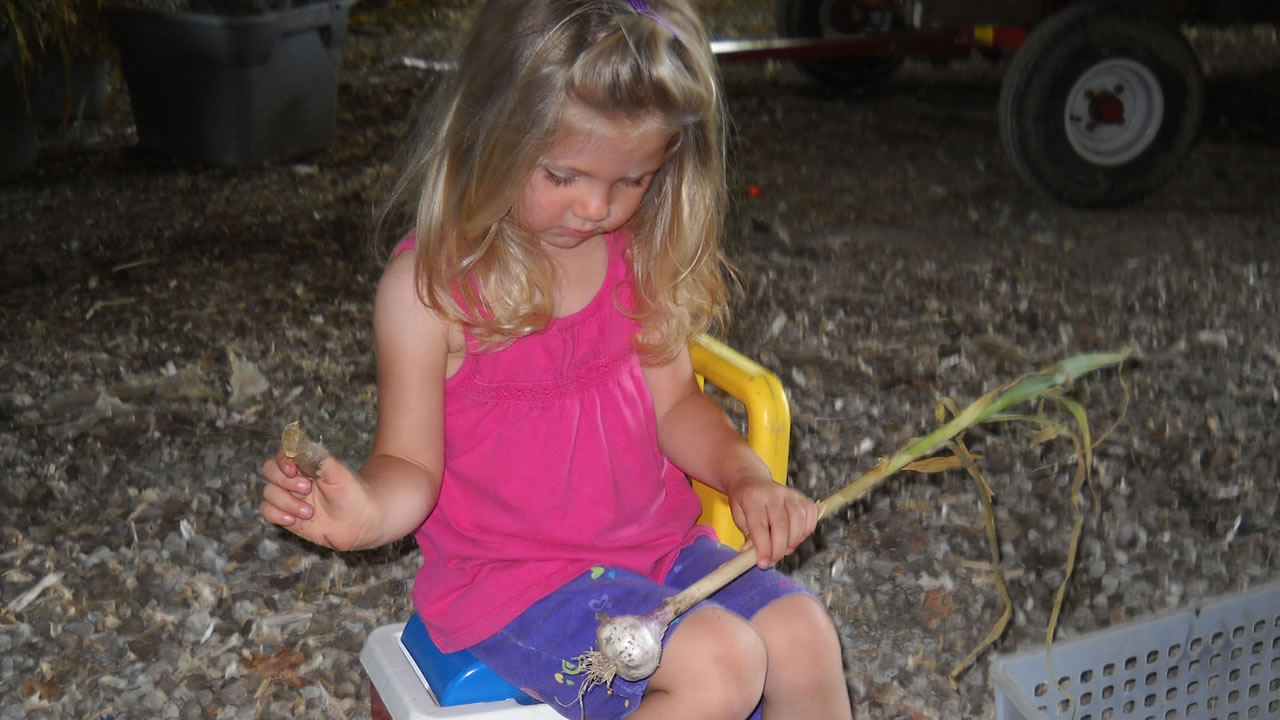
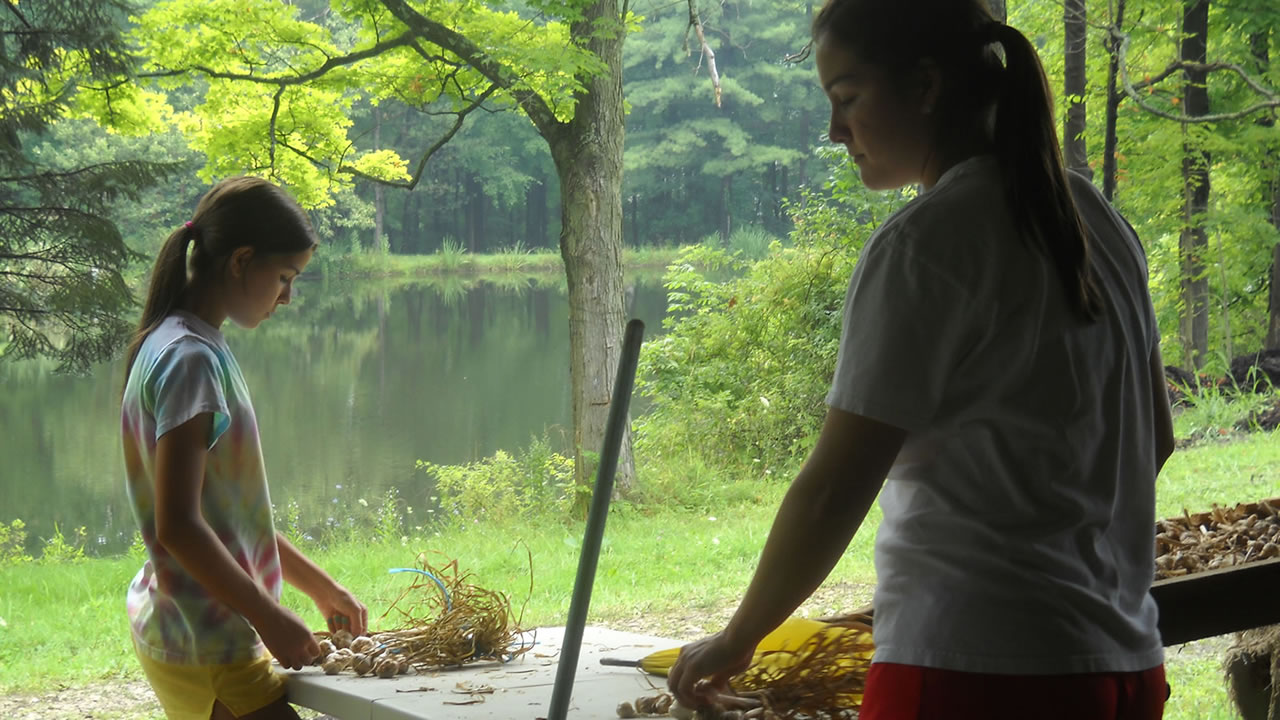
Cracking cloves is the process of splitting the bulb and separating its cloves. Bulbs can have as few as two or three to as many as twenty or so cloves, depending on the variety. Small bulbs are easier to crack than large bulbs. A butterknife is very helpful in splitting the bulb apart. Rubber gloves protect the hands.
Cracking a ton of seed garlic (or even five hundred pounds) is a daunting task, taking many hours. But if you have a group of friends helping you, it can be an occasion of fun and sweet fellowship.
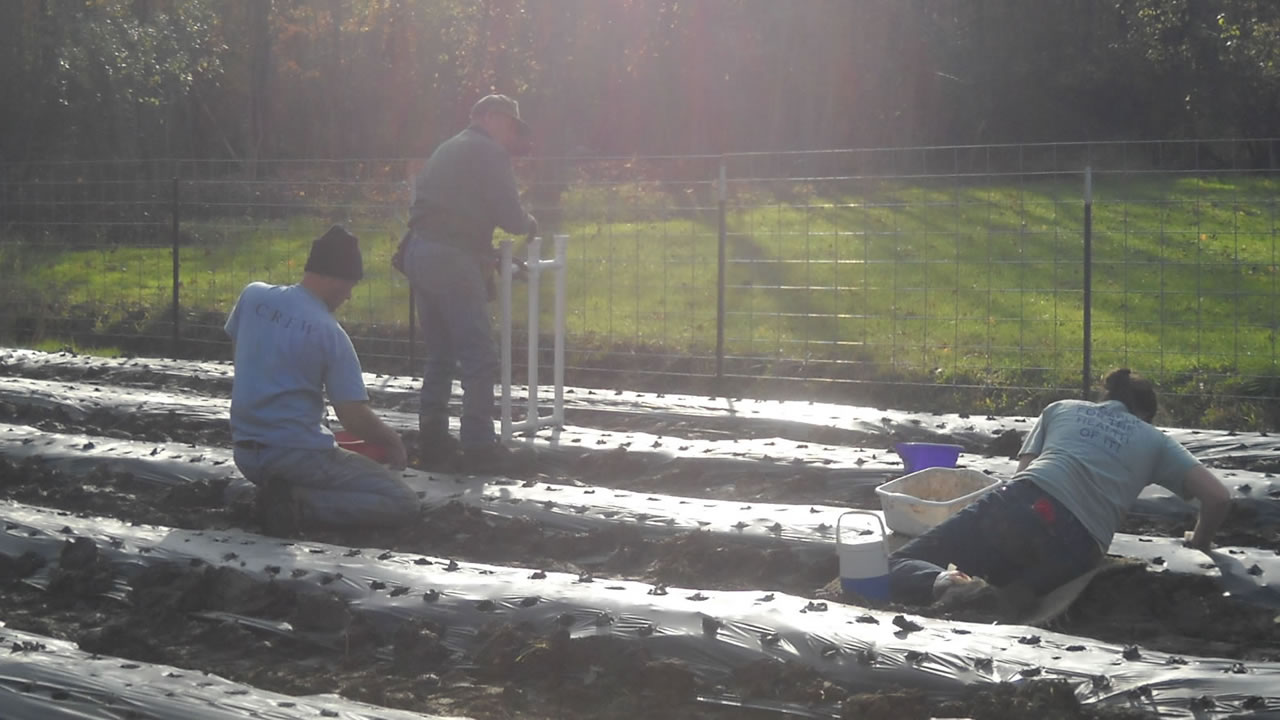
Steve and Joe, two loyal friends, help in the planting of thousands of garlic cloves. The cloves should be covered with at least an inch or two of soil and spaced no closer than four inches in the row, with rows spaced at least 5 inches apart.. For larger bulbs plant at least six inches apart. Optimal planting time in Ohio is during the month of October.
Due to unusual circumstances and weather, the snow came before we got everything planted. Here a crew of nine is raking off three inches of snow, poking holes through the frozen crust, and planting twenty-eight thousand cloves of Susanville, a soft neck garlic with a mild flavor that's excellent for baking and braiding.
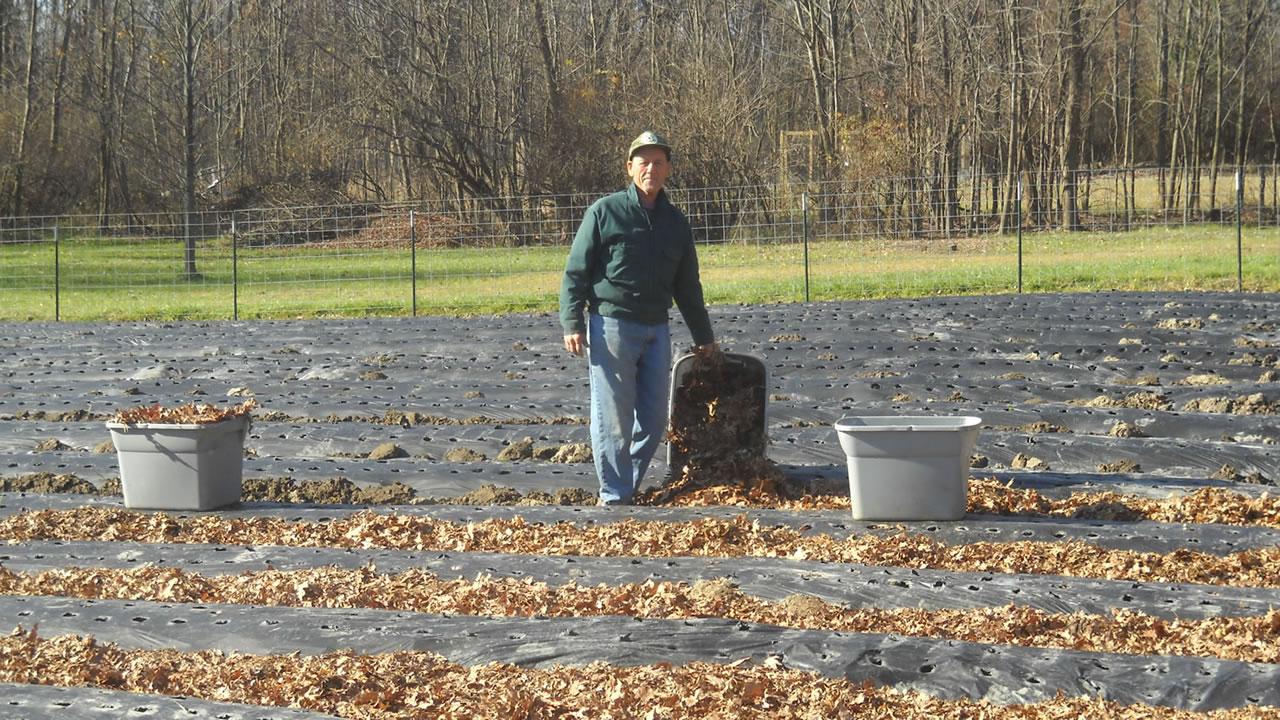
Covering the garlic with four to six inches of leaf-mulch has many benefits. It keeps the soil warm longer, promoting fall root growth. It prevents heaving of the cloves when the ground freezes. It moderates moisture and temperature extremes. It encourages worm activity. And as it decomposes, it provides plant nutrients. Lastly, but most importantly, it keeps weeds down.
It seems like there is no easy way to mulch. It's probably the hardest work in the twenty-one steps required to raise a crop of garlic. To raise great garlic on any scale requires a deep love for it. To me, it is an enigma, mysterious and wonderful at the same time.
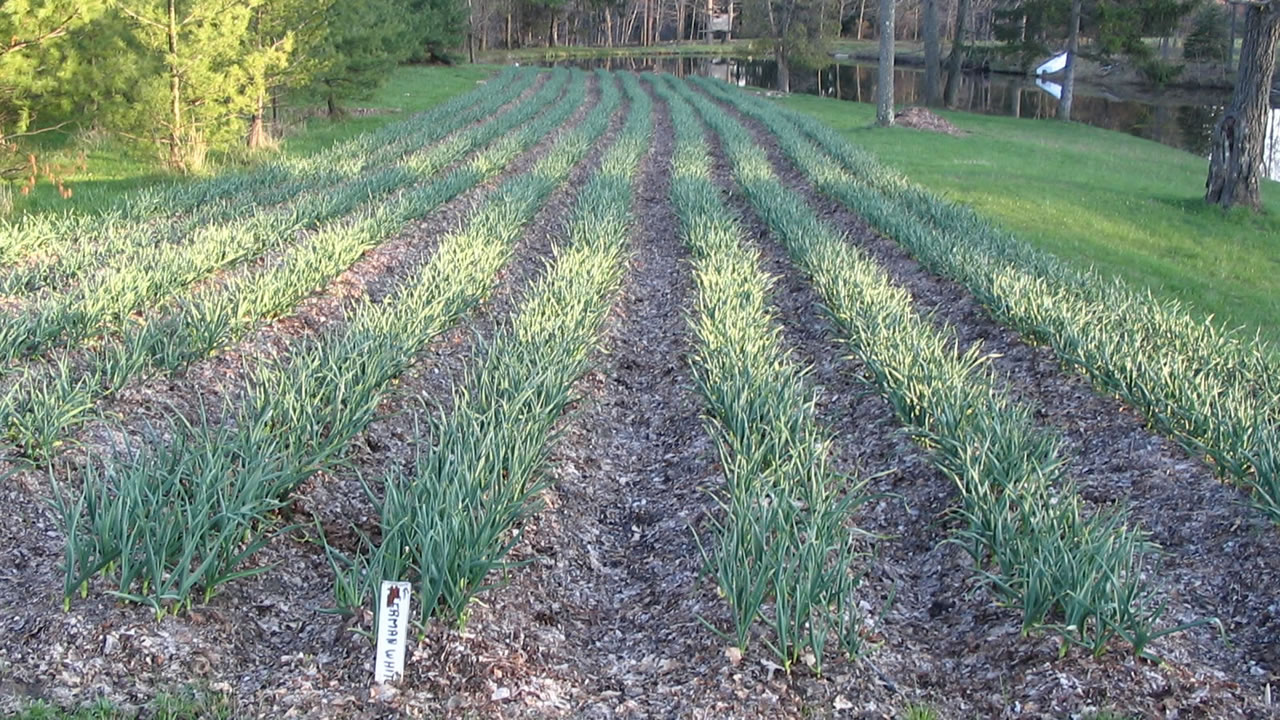
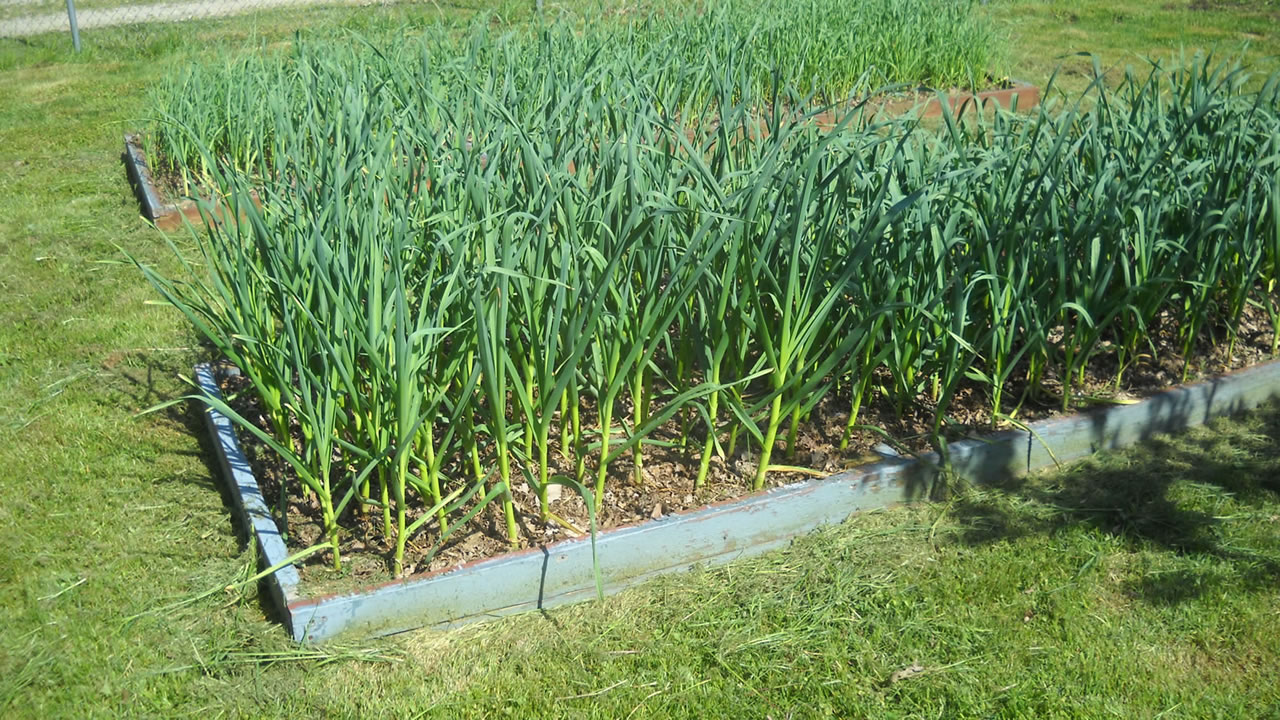
The cloves, with their roots already established, are waiting for forty days of cold weather (below forty degrees) so that the signal is given to tell them to grow into a bulb. Once that happens, they will pop their heads through the mulch in March and will be ready for harvest in July.
Thanks for joining us.